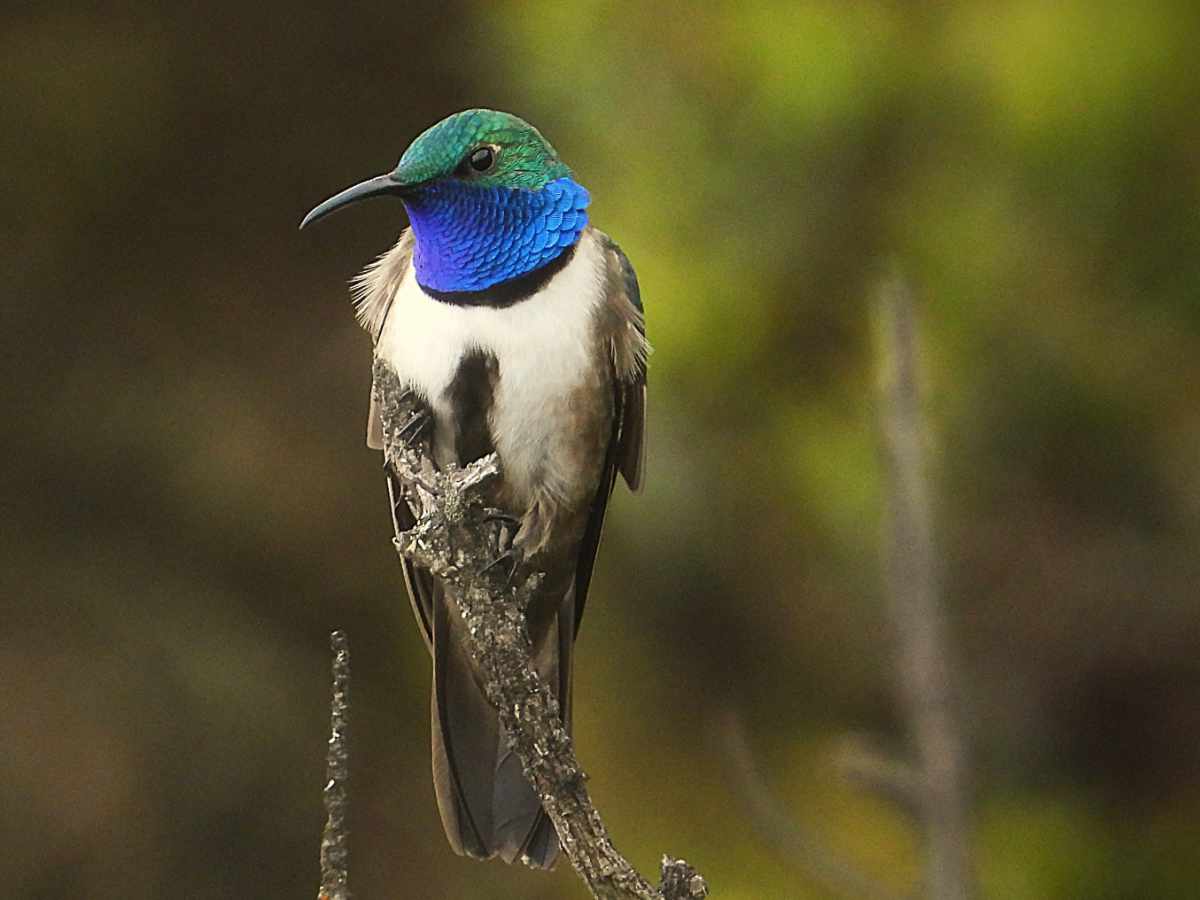
The Blue-throated Hillstar is one of the most recently discovered birds in Ecuador. Its story began with an observation and a photo, taken in a remote páramo in the southwestern part of the country.
An almost accidental discovery
In April 2017, Ecuadorian researcher Francisco Sornoza-Molina, from the National Institute of Biodiversity, photographed for the first time a hummingbird he didn’t recognize in the páramos of Cerro de Arcos, in El Oro Province. He shared the images with the birdwatching community, and other colleagues—including Niels Krabbe, Roger Ahlman, Jonas Nilson, Robert Bleiweiss, and Juan Freile—all suspected it was something special, either a subspecies or a new species..
Sornoza immediately organized a scientific expedition with Juan Freile and Jonas Nilson. Later, in the lab, geneticist Elisa Bonaccorso from Universidad San Francisco de Quito joined the group as a specialist in this genus of hummingbirds (Oreotrochilus), and later Niels Krabbe joined to obtain audio recordings of several individuals. The highly proactive team spent 8 months confirming the discovery with additional expeditions before publishing the formal description on September 26, 2018, in the scientific journal The Auk. Bonaccorso, who took part in the description, called the discovery “extraordinary” in statements to Mongabay Latam: in Ecuador, a new bird species had not been described since 2000.
That’s how the Blue-throated Hillstar (Oreotrochilus cyanolaemus) was formally born, a name that describes exactly what makes it unmistakable.
How to recognize it
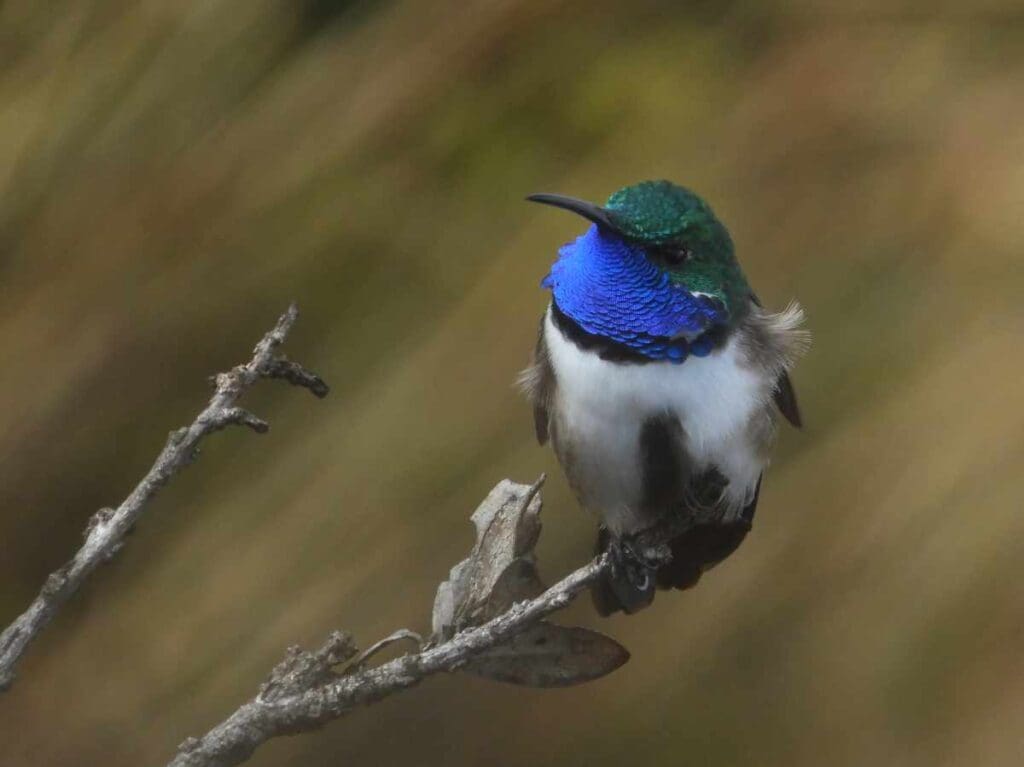
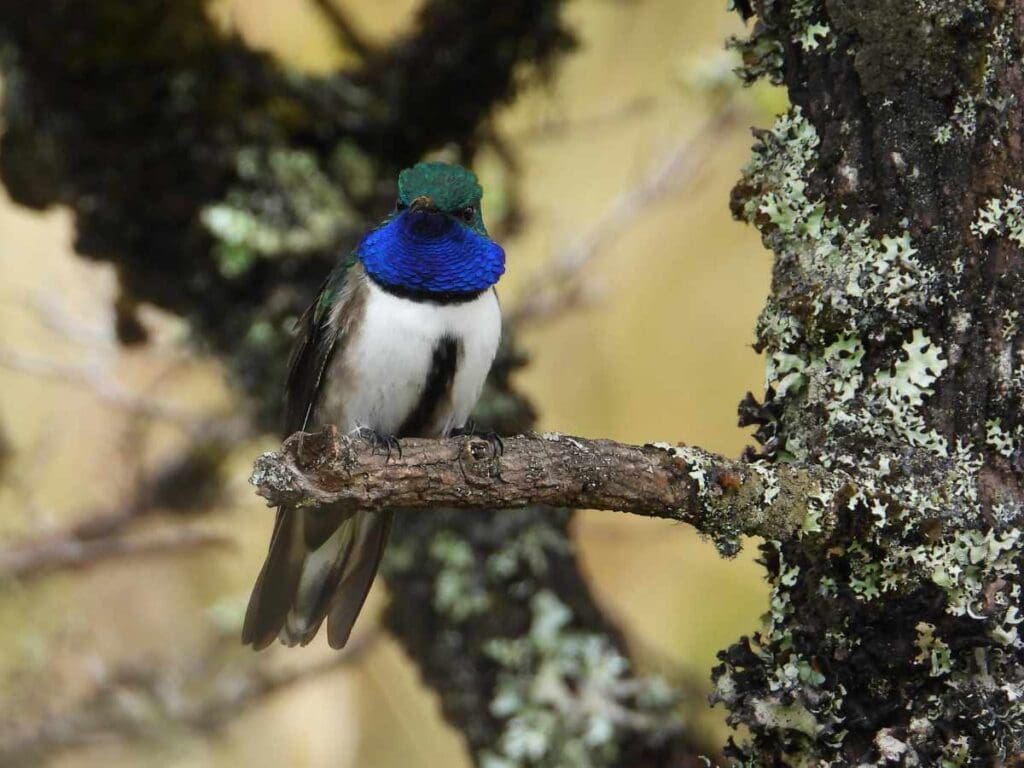
The male is hard to confuse: emerald green crown, a narrow black collar, white breast crossed by a dark gray band, and the feature that gives it its name: a throat of iridescent feathers that, depending on the light, lights up in an intense electric blue. “When you see it raise its throat, it’s completely blue,” describes José León, biologist at Fundación Jocotoco, in an interview with Mongabay Latam. According to him, it’s the only species that displays that unmistakable blue brilliance on the throat.
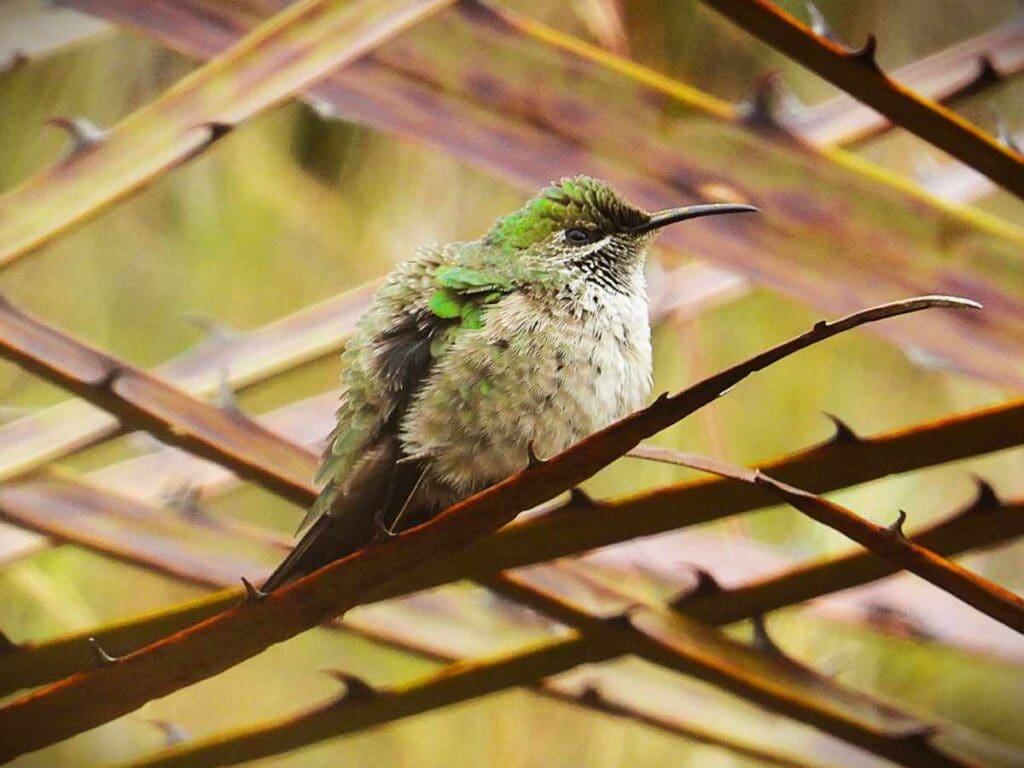
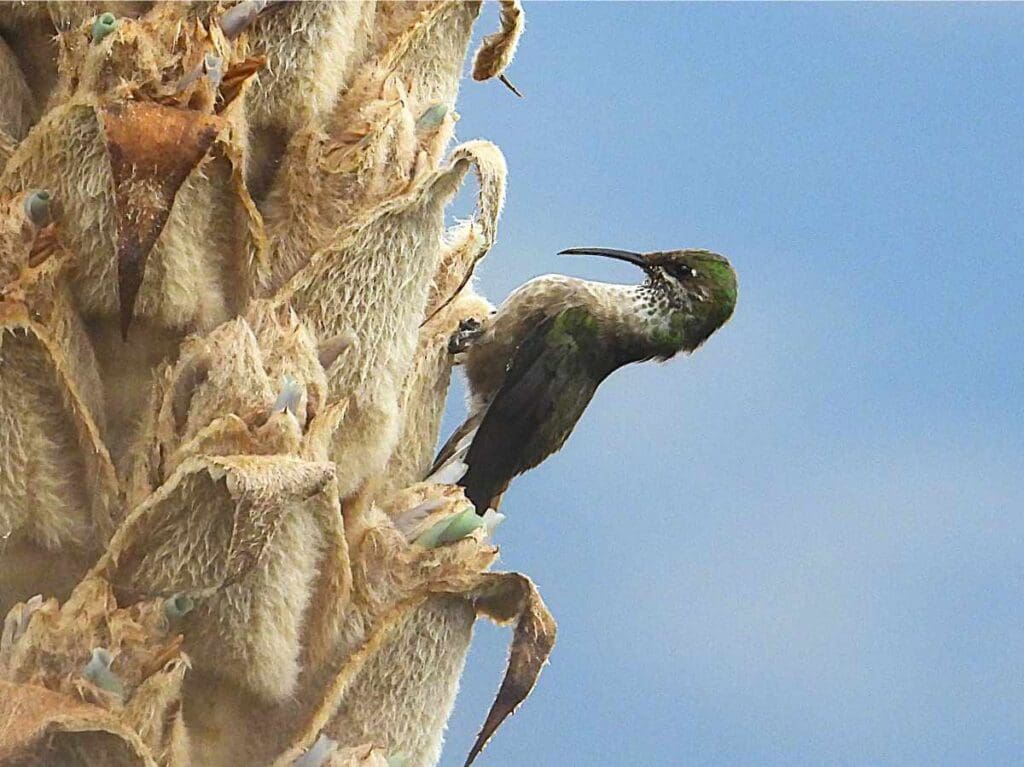
The female is much more discreet: brownish-olive back, lighter-toned belly, and whitish throat speckled with small brown spots, with no trace of the males’ blue brilliance. This marked difference between sexes (sexual dimorphism) is common in the genus Oreotrochilus, but in this species it’s especially pronounced. It measures barely 11 centimeters. It’s small even for a hummingbird.
A world of barely 63 square kilometers
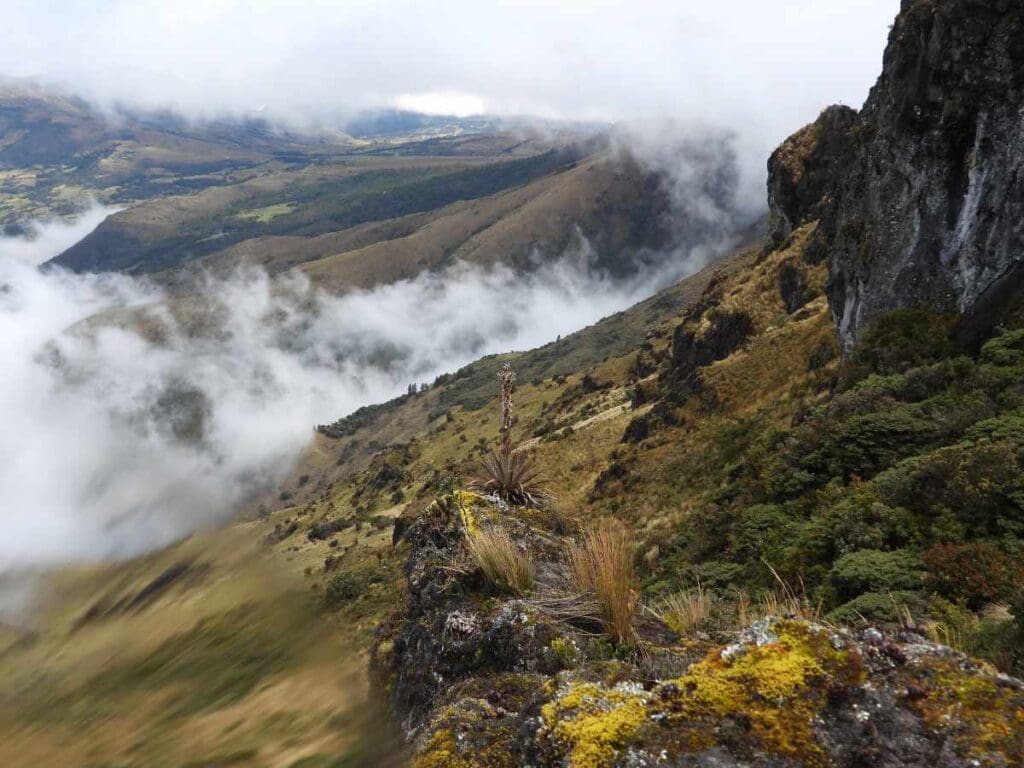
The Blue-throated Hillstar only exists in a very specific stretch of Andean páramo, between 3,300 and 3,700 meters elevation, in the Chilla-Tioloma-Fierro Urco mountain range, the border area between El Oro and Loja provinces. More recent studies estimate that its actual distribution area is barely 62.7 square kilometers, smaller than initially thought.
Cerro de Arcos, the site where it was first seen, owes its name to its rock formations: natural arches carved over hundreds of thousands of years by wind and rain. There, in the caves and crevices of these rocks, is where the hummingbird nests. According to Fundación Jocotoco’s research, it almost always does so in the highest and deepest part of the opening, something that could give it some advantage against predators.
Its favorite plants
It has three favorite plants: chuquiragua (Chuquiraga jussieui) and two species of puya (Bromeliaceae), Puya hamata and Puya roseanea, the latter also listed as Critically Endangered (CR).
Chuquiragua, known as “the flower of the Andes,” is the main one. As José León explains, from Fundación Jocotoco, its red-orange flowers are practically the hummingbird’s only food source, and in return it pollinates it: both species depend on each other, and both are now endangered.
There are six other species of the genus Puya in the area, but according to Roberto Albán, a researcher who monitors the species, hamata and roseanea are the ones the hummingbird uses most after chuquiragua.
A race against time
Since its description, the species has been under constant threat. Today, mining concessions cover nearly 25% of its limited territory; added to that are cattle ranching, frequent vegetation burning, and the advance of pine plantations.
The estimated population has been adjusted with each new field study. The original 2018 description estimated between 250 and 750 individuals as an upper limit. More recent field research by Fundación Jocotoco places the figure at barely 80 to 110 mature individuals. That’s why the International Union for Conservation of Nature (IUCN) now classifies the species as Critically Endangered, the highest category before extinction in the wild.
The response: a reserve created in record time
Just two years after its scientific description, Fundación Jocotoco established the Cerro de Arcos Reserve in 2020 (more than 387 hectares of protected páramo in Loja province), which José León describes as “an emergency action to save the species from extinction.” Since then, the foundation has progressively expanded the protected area and has carried out a reforestation program with native chuquiragua: more than 4,750 plants planted to date, designed to ensure food year-round.
Part of the monitoring work is done by local park ranger Nolberto Ordóñez, who ended up being co-author of a scientific study published in 2023 on the species’ ecology and distribution. It’s a clear example of how the local community and science work together on this project.
Why it’s our emblematic bird for 2026
The Blue-throated Hillstar was discovered just a few years ago and is already on the brink of disappearing. Thanks to the quick work of scientists, park rangers, and local communities, it still has a chance. Seeing it, or simply knowing it exists, is a good example of why birdwatching tourism and conservation go hand in hand at the Ecuador Bird Fair.


Leave a Reply